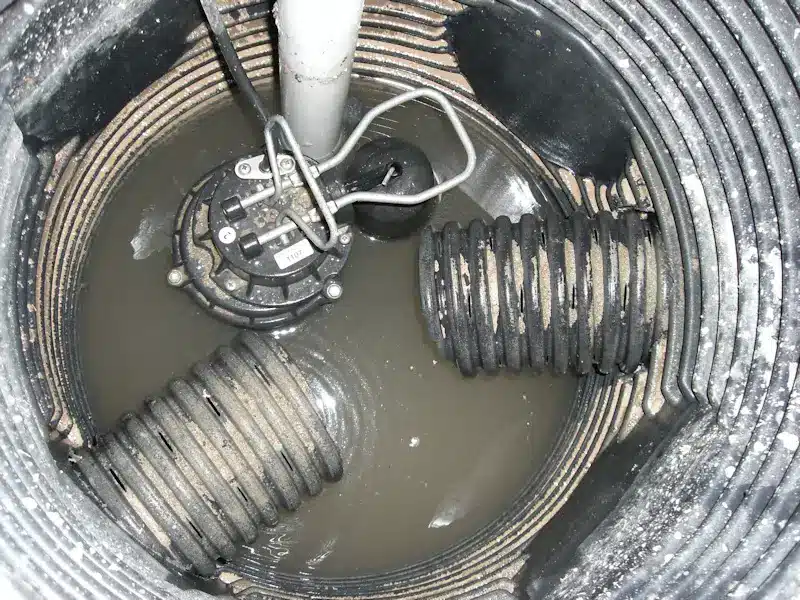
What Milwaukee Homeowners Get Wrong About Sump Pumps
A sump pump is the main line of defense against groundwater rising through a basement floor, and most homeowners across southeastern Wisconsin have never given much thought to how theirs actually works. They do not know what triggers it, what it depends on to run, or whether it could keep up during the kind of storm that pushes clay soil past its limit. That is not a small gap in knowledge for a piece of equipment that stands between a dry basement and a flooded one.
The misconceptions tend to follow the same pattern. Some homeowners believe the sump pit itself is what keeps the basement dry. Others assume one pump is enough, or that it will always run when it needs to. In southeastern Wisconsin, where dense clay soil holds water against the foundation long after the rain stops and spring snowmelt can saturate the ground for weeks, those assumptions carry real consequences.
How a Sump Pump Actually Works
A sump pump sits in a pit at the lowest point of the basement floor and does one thing: moves water out before it can spread. As water enters the pit and the level rises, it lifts a float switch that triggers the motor. The pump pulls water up through a discharge line and pushes it away from the house. When the pit level drops, the float falls and the pump shuts off until the next cycle.
That cycle is the part most homeowners never see. During a heavy storm or a wet Wisconsin spring, a pump can run hundreds of times in a single day, each time pulling water out and resetting before the next load arrives. The pit is just the collection point. The pump is what actually keeps the basement dry, and it depends on a working float switch, a clear discharge line, and above all, a continuous power supply to do it.
A Sump Pit Without a Pump Is Just a Hole in the Floor
For a long time, a sump pit on its own was considered good enough. Water seeps into the basement, trickles into the pit, and the problem takes care of itself. In older homes across southeastern Wisconsin, that was the standard approach, and for minor seepage on a calm day it could seem to work fine.
The problem shows up the moment conditions change. A heavy summer storm dumps several inches of rain in a few hours, the clay soil saturates fast, and water is not trickling anymore. It is moving across the floor toward the pit faster than it can drain away on its own. A pit without a pump has no mechanism to move that volume anywhere. The water rises, spreads, and the floor is wet before anyone realizes the pit was never going to be enough.
A clogged drain line makes it worse. So does a heavy snowmelt hitting ground that is still partially frozen. The pit was designed as a collection point, not a solution. Without a pump actively pulling water out and pushing it away from the house, the pit fills and the basement floods. The difference between a dry basement and a wet one is not the hole in the floor. It is everything that happens after the water gets there.
What Happens to Your Sump Pump When the Power Goes Out
The heaviest storms in southeastern Wisconsin do not just bring rain. They knock out power, and a pump that has been running hard all evening goes offline the moment they do.
A standard sump pump runs on the same electrical circuit as everything else in the house. One tripped breaker, one blown transformer down the street, and it stops. The water does not. For homeowners who have never lost power during a bad storm, that scenario can feel unlikely. For anyone who has, it is the first thing they think about when the next one rolls in.
This is where a battery backup earns its place. Accurate Basement Repair installs the StormCore Elite™ Fully Redundant Pumping System, which pairs a secondary pump with a deep-cycle marine battery. If the primary pump loses power or fails outright, the backup activates automatically without anyone flipping a switch or noticing the outage first. It keeps the pit clear and runs until power is restored.
For a finished basement in Wauwatosa or a home in Racine with HVAC equipment in the crawl space, that automatic switchover matters. A few hours of an unattended, powerless pump during a major storm is enough to put water somewhere it should never be.
he Sump Pump Mistakes That Leave Wisconsin Basements Wet
Most sump pump problems do not start with a flood. They start with months or years of small oversights that go unnoticed until a bad storm exposes them all at once. A pump that has never been tested, a discharge line that froze solid last February and never got checked, a float switch stuck in the down position, an aging motor that has been cycling for fifteen years without a single inspection. None of those announce themselves ahead of time.
These are the situations inspectors see most often in southeastern Wisconsin homes:
- Never testing the pump. Pouring a bucket of water into the pit to confirm the float triggers and the motor runs takes five minutes. Most homeowners have never done it and would not know if the pump had stopped working until water was already on the floor.
- Ignoring the discharge line in winter. The discharge line carries water away from the house, but in a Wisconsin winter it can freeze and block the outlet entirely. A pump running against a frozen line either burns out the motor or sends water back into the pit with nowhere to go.
- Assuming a dry basement means no risk. A basement that has never had water is not necessarily a basement that never will. Soil conditions change, drain tile ages, and water tables shift. A pump that has never been seriously tested has also never proven it can handle serious conditions.
- Running an old pump to failure. Most sump pumps are rated for seven to ten years. A fifteen-year-old pump that still turns on is not necessarily a pump that will keep up when a storm pushes real volume into the pit.
None of these are difficult problems to get ahead of. An annual inspection catches most of them before they matter, which is why Accurate Basement Repair’s Lifetime TotalCare™ Maintenance program includes regular system checks as part of keeping a waterproofing system working the way it should.
What It Takes to Keep a Basement Dry in Milwaukee
A sump pump is not a standalone solution. It is one part of a system that includes drain tile collecting water at the footing, a pit receiving that water, a pump moving it out, a discharge line carrying it away, and a battery backup holding the whole thing together when the power goes out. Any weak point in that chain is where a basement gets wet.
Accurate Basement Repair has been installing and servicing these systems across southeastern Wisconsin since 2008. The Guaranteed Solutions for Life™ covers not just the installation but the equipment itself, with product replacement included at no charge if something fails. The Lifetime TotalCare™ Maintenance program keeps the system running the way it should between visits, so a pump that has been sitting idle through a dry summer does not go untested into a wet spring.If you are not sure whether your current setup is complete, a free inspection will tell you what you have, what is missing, and what the options are. There is no pressure and no guesswork.
Schedule your free inspection.
Frequently Asked Questions About Sump Pumps
Do I need a sump pump if I already have a sump pit?
Yes. A sump pit only collects water — it does not remove it. The sump pump is the component that pushes water out of your basement through the discharge line and away from your foundation. During heavy rain, snowmelt, or rising groundwater, a pit without a working pump can fill quickly and lead to basement flooding.
Why does my basement flood even though I have a sump pump?
A sump pump does not guarantee a dry basement if another part of the system fails. Common causes of flooding include power outages, pump failure, a stuck float switch, clogged discharge lines, frozen discharge pipes, or a pump that cannot handle the amount of incoming water. A complete basement waterproofing system requires the drainage system, sump pit, pump, discharge line, and backup protection to work together.
What happens to my sump pump during a power outage?
A standard sump pump stops working when electricity is lost, even if water continues entering your basement. This is why many homeowners install a backup sump pump system or battery backup. A backup system helps keep water moving during storms, power failures, or if the primary pump stops working.
How often should I test or replace my sump pump?
You should test your sump pump regularly by pouring water into the sump pit and confirming that the pump activates and removes water properly. Check the discharge line for blockages and watch for signs of wear. Most sump pumps have a limited service life, so an older pump should be inspected or replaced before severe weather puts it under heavy demand.