Mold vs. Mildew in Your Basement: What the Growth Says About Your Water Problem
Mildew is a type of mold, and in a Wisconsin basement both grow for the same reason. Something down there stays damp long enough for spores to take hold. What the growth looks like and where it shows up are the details that help you deal with it.
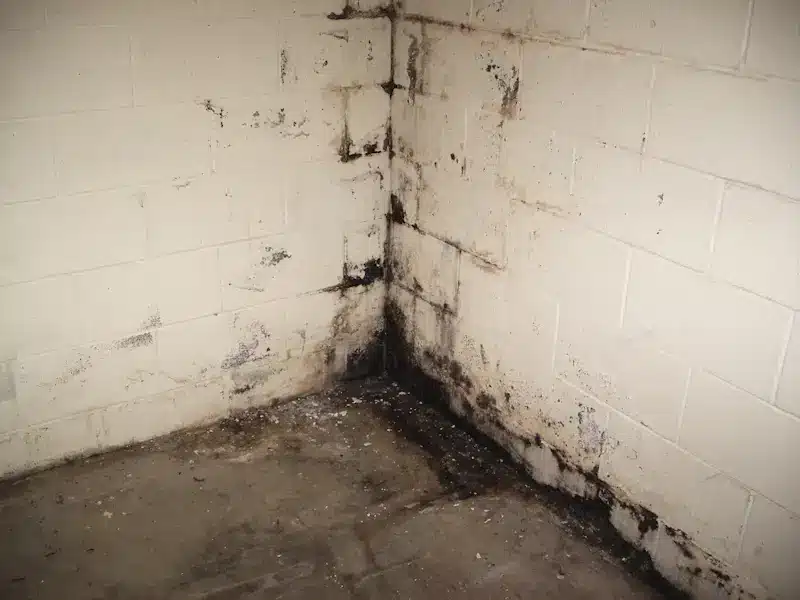
A dark band along the bottom of the drywall, black spots on the wall around a crack, and a gray coating on a cold-water pipe each point to a different moisture source. That might be groundwater seeping in at the base of the wall, water coming through the crack, or humid air condensing on a cold surface. Reading those clues tells you what you can clean up yourself and what has to change in your basement to keep the mold from coming back.
Is Mildew the Same as Mold?
The EPA defines mildew as certain kinds of mold or fungus. The word gets used for mold that grows flat across a surface, like the thin coating you might wipe off a windowsill or a shower wall. Mold is the broader name, and it covers growth that has turned fuzzy, raised, or slimy as well.
The EPA also notes that molds come in many colors, including white and black. A pale film on your basement wall deserves the same attention as a dark spot. Whatever you call it, the growth is living on moisture that keeps reaching that surface.
When Basement Mold Can Be Cleaned and When the Material Has to Go
What the mold is growing on decides how you deal with it. On a hard surface like a painted block wall, a steel support post, or a vinyl floor, the growth sits on top. The EPA recommends scrubbing it off with detergent and water and drying the surface completely.
Drywall, carpet and pad, drop-ceiling tiles, and wood paneling soak up moisture, and mold can grow into the small spaces inside them. The EPA says mold in porous materials may be difficult or impossible to remove completely, and that items like ceiling tiles and carpet may have to be thrown away. If a stain comes back after cleaning or the drywall has gone soft, plan on cutting that section out.
Don’t paint over mold. The EPA warns that paint applied over moldy surfaces is likely to peel, and the mold is still there underneath. Clean the surface and let it dry completely before you paint.
Where Basement Mold Grows and What It Says About the Water Source
Mold grows where moisture reaches it, so the spot where you found it is a clue. Check whether the growth sits low on the walls, around a crack, behind a finished wall, or up on the pipes and framing. Each location points to a different way water is getting into your basement.
Mold Along the Bottom of the Walls
A dark band along the base of the drywall, or growth on the bottom board of a framed wall, sits right where the wall meets the floor. That seam is one of the paths water takes into a basement. After spring snowmelt or a heavy rain, groundwater builds up in the soil around the foundation and pushes against it, a force called hydrostatic pressure. Water forced through the seam soaks the bottom of whatever is built against the wall. Interior drain tile catches that water along the perimeter and carries it to a sump pump.
Mold Around a Wall Crack
Growth that fans out from a crack in a poured wall, or follows a mortar joint across a block wall, marks a path water is taking through the foundation. You may see a damp streak below the crack or a stain that darkens after it rains.. Accurate repairs leaking foundation cracks with polyurethane and epoxy injection.
Mold Behind Paneling or Drywall
Mold on a finished outside wall can grow on the back of the drywall or paneling, where you can’t see it. A musty smell with no visible source is a reason to suspect it’s there. Water seeping through the foundation wall keeps the space behind the finish damp. Pulling the finish off to look can stir up spores, so have a professional open the wall if you think mold is hidden. A basement wall membrane directs water that comes through the wall down into the drainage system, which keeps it off the back of the finished wall.
Mold on Pipes, Ductwork, and Floor Joists
Spots on the cold-water lines, the ductwork, or the joists overhead point to the air. When humid air hits a cold surface, water condenses on it and gives mold the moisture it needs. Rust on a drainpipe is another sign that water has been collecting on it. Accurate’s guide to humidity vs. basement water problems can help you sort out whether the air or a leak is behind it.
Mold in more than one of these spots can mean more than one source. Note where each patch is before you clean it, and take photos if you can. That record helps an inspector trace the water back to where it’s getting in.
Is It Mold or Efflorescence on Your Basement Wall?
A white, chalky coating on a block or poured concrete wall may be efflorescence. It’s a mineral residue that water carries out of the masonry and leaves behind when it dries at the surface. Mold feeds on organic material, so white growth on a wood board or the paper face of drywall is mold. Whichever one you find, it means water is moving through that part of your basement. Accurate’s post on what’s on your foundation walls walks through how to tell efflorescence, crumbling concrete, and mold apart.
Fix the Water Problem So Basement Mold Doesn’t Come Back
Mold you clean up will grow back if water keeps reaching the same spot. Scrubbing a wall that sits over a leaking crack or a wet floor seam only buys you time until the next heavy rain. The repair has to match the source you traced the mold back to.
Accurate’s interior waterproofing pairs a drainage channel along the basement perimeter with a sump pump that carries the water out of the house. The wall membrane sends seepage from the walls down into that channel, and leaking cracks are sealed with injection. A battery backup sump pump keeps the system running if the power goes out during a storm.
Accurate backs its waterproofing with Guaranteed Solutions for Life™. That includes a lifetime warranty that transfers if you sell the house, a money-back guarantee, and product replacement for life on parts like sump pumps. Lifetime TotalCare™ maintenance keeps the pump and drainage system maintained after installation.
Schedule a Free Basement Inspection in Southeast Wisconsin
If you’ve found mold in your basement and aren’t sure where the water is coming from, a Certified Foundation Specialist from Accurate Basement Repair can inspect it for free. The specialist will check the walls, the floor, and any cracks, trace the moisture back to its source, and explain what you’re looking at. You’ll get repair recommendations and a written estimate before you decide anything.
Accurate serves homeowners across Milwaukee and Southeast Wisconsin. Have your photos of the moldy spots ready, so the specialist can see where the growth was before cleanup. Get your free estimate and find out what’s keeping your basement damp.